Elderscroll: Reviving the Mystique of Medieval Manuscripts in Modern Design
In an era dominated by sleek sans-serifs and minimalist interfaces, a quiet counter-movement is gaining momentum. Designers, creators, and brands are increasingly seeking typefaces that carry weight, history, and narrative depth. This is where Elderscroll enters the conversation—not as a relic of the past, but as a tool for contemporary storytelling. It represents a deliberate shift toward typography that evokes emotion, context, and a sense of timeless craftsmanship.
More Than Just a Font: The Cultural Resonance of Handwritten Typefaces
The appeal of a typeface like Elderscroll extends far beyond its aesthetic. It taps into a deeper human inclination toward the tactile and the authentic. In a digital landscape saturated with uniformity, handwritten and historically inspired fonts offer a bridge to a tangible past. They signal care, detail, and a narrative intention that standardized typefaces often lack. This isn't mere nostalgia; it's a strategic choice for projects that aim to establish a distinct voice and emotional connection.
Consider the evolution of user expectations. Modern audiences, particularly in creative and professional spheres, are adept at filtering out generic content. They respond to authenticity and craftsmanship. A well-chosen typeface like Elderscroll, with its roots in medieval calligraphy, immediately sets a tone. It suggests a story behind the words, whether for a fantasy novel cover, a heritage brand's packaging, or an immersive video game interface. It transforms text from mere information into an experiential element.
Practical Applications in a Modern Workflow
Integrating a specialized typeface like Elderscroll requires thoughtful application. Its strength lies in its ability to convey specific themes without overwhelming a design. For instance, in branding, it can be used for logos, headlines, or key messaging to evoke tradition, mystery, or artisanal quality. A craft brewery might use it for its name on a label, instantly communicating a story of old-world recipes. An independent game developer could employ it for in-game menus and lore books, deepening player immersion.
For digital creators and marketers, the font finds its niche in targeted content. A blogger writing about historical fiction, fantasy literature, or even modern spirituality might use Elderscroll for article titles or pull quotes to visually align the content with its theme. Educators creating materials for a medieval history unit or a creative writing course can use it to enhance the learning environment. The key is contextual relevance. It’s not for body text in a technical manual, but for elements that serve as visual anchors to a specific genre or mood.
The Balance of Authenticity and Accessibility
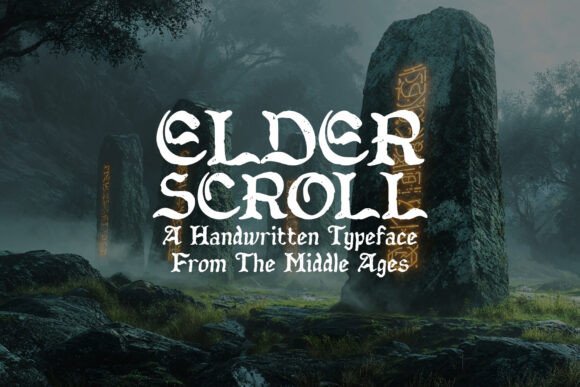
A common challenge with historically inspired typefaces is balancing authenticity with modern readability. Elderscroll addresses this by being a "masterfully crafted" interpretation rather than a strict historical replica. Its design evokes the mystique of ancient manuscripts and weathered scrolls while maintaining a legibility suited for contemporary use. This balance is crucial. It allows the font to function effectively in both print and digital mediums, from book covers to website headers, without sacrificing the user's ability to easily comprehend the message.
This approach reflects a broader trend in design: the thoughtful fusion of old and new. It’s about leveraging the emotional power of historical forms while meeting the functional demands of today's media. A business owner considering this font for a project should evaluate its performance across different sizes and backgrounds. A freelance designer might test it in a mockup to ensure it complements, rather than competes with, other visual elements like imagery or color palettes.
Navigating Trends Without Chasing Fads
The interest in medieval and fantasy aesthetics is not a fleeting trend. It is sustained by enduring genres in literature, film, gaming, and even personal lifestyle choices. The popularity of epic fantasy series, the growth of tabletop role-playing games, and the revival of calligraphy and lettering arts all contribute to a market that values this visual language. Elderscroll fits neatly into this ecosystem, providing a professional-grade tool for creators within and adjacent to these fields.
However, its application is not limited to overtly fantasy-themed projects. The underlying qualities of the font—its handcrafted feel, its suggestion of history, its uniqueness—can be adapted. A luxury brand might use it sparingly to add a layer of heritage and exclusivity. A lifestyle influencer focusing on slow living and analog hobbies could use it to reinforce their brand identity. The font becomes a versatile asset for conveying a sense of depth and intentionality.
Recommendations for Creators and Professionals
For those considering integrating Elderscroll into their toolkit, a practical approach is advised. Begin by identifying the core narrative of your project. Does it involve mystery, legacy, fantasy, or craftsmanship? If so, this typeface could serve as a powerful visual shorthand. Use it for high-impact, low-volume text: logos, titles, headings, or call-to-action buttons where its character can shine without causing visual fatigue.
Pair it strategically with complementary typefaces. A clean, neutral sans-serif or a simple serif for body text will create a necessary contrast, ensuring overall readability. This hierarchy allows Elderscroll to perform its intended role: to capture attention and set the scene. For entrepreneurs and business owners, this typographic strategy can differentiate a brand in a crowded marketplace, offering a visual story that competitors using default fonts cannot tell.
Ultimately, the value of a typeface like Elderscroll lies in its ability to communicate on a subconscious level. It doesn't just display words; it frames them within a context of legend and antiquity. In a world moving ever faster, there is a growing appreciation for tools that allow us to pause and connect with something that feels enduring. By thoughtfully incorporating such elements, creators and professionals can build more resonant, memorable, and human-centered experiences.