Evaluating Super Book: A Practical Look at a Cartoon-Inspired Display Font
In the search for effective visual assets, finding a typeface that conveys a specific tone without sacrificing clarity can be a challenge. The Super Book font presents itself as a solution for projects requiring a bold, playful, and approachable aesthetic. This evaluation examines its design principles, practical applications, and overall value for professionals and creators who need to communicate joy and accessibility in their work.
Core Design Characteristics and Purpose
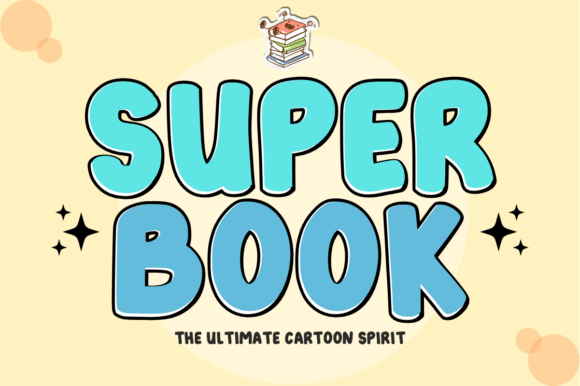
At its foundation, Super Book is a display typeface. This distinction is crucial; it is not designed for long-form body text but for headlines, titles, logos, and short, impactful statements. Its design draws clear inspiration from the lettering found in classic comic books and children's animated media. The letterforms are intentionally thick and rounded, creating a soft, friendly appearance that avoids sharp edges and aggressive angles. This roundedness contributes to a sense of safety and whimsy, making it inherently non-intimidating.
The font's "chunky" weight ensures high visibility and a strong presence on any medium. Each character is constructed with consistent proportions, which aids in maintaining a harmonious and balanced look when words and phrases are assembled. The overall spirit is one of enthusiasm and energy, aiming to evoke an immediate positive emotional response from the viewer. Its purpose is singular and clear: to inject a dose of lighthearted fun into visual communications.
Practical Applications and Audience Fit
The utility of Super Book is most pronounced in contexts where the target audience includes children, families, or consumers seeking cheerful, engaging products. For educators and content creators in the early learning space, this font can transform educational materials. Worksheets, classroom posters, and interactive app interfaces become more inviting and less formal, potentially increasing engagement among young learners. The font's clarity, despite its decorative style, supports readability for developing readers when used at appropriate sizes.
For entrepreneurs and small business owners, particularly those in the toy, children's clothing, or party supply industries, Super Book offers a valuable branding tool. It can be effectively used on product packaging, storefront signage, and marketing collateral to establish a brand identity that is approachable and family-friendly. A bakery specializing in birthday cakes, for instance, could use this font for its logo and menu to immediately communicate a celebration-oriented atmosphere.
Freelance designers and marketers will find it a useful addition to their toolkit for specific client projects. It is well-suited for designing invitations for children's parties, creating headers for parenting blogs, or developing social media graphics for events like school fairs or library story hours. The font's consistent character makes it reliable for creating cohesive themed designs across multiple assets.
Strengths and Performance in Real-World Use
The primary strength of Super Book lies in its immediate emotional impact. It successfully achieves its goal of looking joyful and spirited. The thick strokes ensure that it remains legible even when used as a background element or at smaller sizes on digital screens, a common requirement for web and app design. The rounded terminals and open counters (the spaces inside letters like 'o' and 'e') prevent the letters from looking cluttered or merging together, which is a common pitfall in heavily stylized fonts.
In terms of usability, the font is straightforward. Most versions include standard character sets sufficient for English and other Latin-based languages. It typically supports basic punctuation and numerals. For a professional workflow, it installs like any other desktop font and integrates seamlessly with major design software like Adobe Creative Suite, Canva, or Figma. Its reliability is in its simplicity; it does what it promises without complex OpenType features that might go unused in its primary applications.
Limitations and Considerations for Professional Use
A balanced evaluation must acknowledge constraints. The very characteristics that make Super Book appealing for certain projects are also its limitations. Its strong stylistic personality means it is not a versatile, all-purpose font. Using it for a corporate financial report, a luxury brand, or any context requiring seriousness and authority would be inappropriate and undermine credibility. It is a niche tool, not a foundational workhorse.
Furthermore, as a display font, its effectiveness diminishes rapidly with overuse. A design that employs Super Book for every headline, sub-headline, and button may feel overwhelming and childish rather than playful. Successful application often involves pairing it with a clean, neutral sans-serif or serif font for body text to create visual hierarchy and balance. The cartoonish aesthetic also has a relatively short shelf-life for trends; while classic in its inspiration, its application should be carefully considered for projects requiring a long-term, timeless brand identity.
Conclusion: A Valued Specialist in the Creative Toolkit
Super Book is not a font for every project, nor does it claim to be. Its value is in its specialization. For professionals whose work involves communicating with children, celebrating milestones, or crafting brands centered on joy and play, it is a highly effective and purposeful asset. It delivers on its promise of a bold, friendly, and cartoon-inspired spirit with consistent quality and ease of use.
When evaluated against its intended purpose—providing a heroic boost of fun—it performs reliably. Its strength is in its focused design and clear emotional resonance. The decision to use it should be guided by a precise understanding of the project's audience and goals. For the right context, Super Book is more than just a font; it is a tool for creating connection and delight, making it a worthwhile consideration for the targeted creator's resource library.