Nostalgic Words: Crafting Timeless Connections Through Vintage Typography
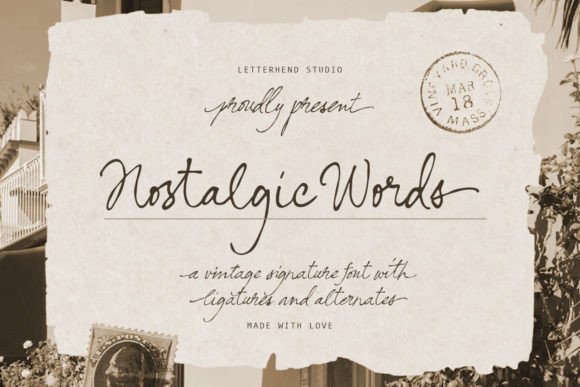
In an era saturated with sleek, minimalist digital interfaces and sterile sans-serif fonts, there is a profound yearning for the human touch. We often seek that tangible connection to the past—something that feels handcrafted, intimate, and enduring. This is where Nostalgic Words enters the conversation, not merely as a typeface, but as a vessel for emotion. As a vintage signature script based on manual handwriting, Nostalgic Words bridges the gap between modern digital requirements and the warmth of analog artistry. It is designed for creators who want their work to whisper stories of heritage and elegance rather than shout with corporate rigidity.
The Anatomy of the Typeface: More Than Just Letters
To truly appreciate the value of Nostalgic Words, one must look beyond the surface level of its characters. This typeface is a masterclass in typographic engineering designed to mimic the fluidity of the human hand. It is not a static set of shapes; it is a dynamic system. The font is built upon the foundations of a vintage signature script, meaning it possesses the rhythmic flow and variable stroke widths found in traditional calligraphy and mid-century advertisement lettering.
However, what sets Nostalgic Words apart from generic script fonts are its technical features, specifically the inclusion of ligatures and alternates.
- Ligatures: In typography, a ligature occurs when two or more letters are joined to form a single unit. In Nostalgic Words, these are essential for maintaining realism. When you type a "t" next to an "h," or an "l" next to an "e," the font seamlessly connects them, eliminating awkward overlaps that scream "computer-generated." This ensures the text looks like it was written in a single, unbroken stroke of ink.
- Alternates: Repetition is the enemy of natural handwriting. If every "a" looks identical, the illusion of manual writing breaks. Nostalgic Words includes alternate character sets, allowing designers to swap out specific letters to create variation. This feature gives the text an organic, bespoke quality, making it appear as though it was custom-lettered for that specific project.
These features combine to create a typeface that feels alive. It captures the slight imperfections and the confident flow of a skilled hand, offering a warmth that rigid geometric fonts simply cannot replicate.
Real-World Applications: Where Nostalgic Words Shines
The versatility of Nostalgic Words makes it a powerful tool across a wide spectrum of creative and professional industries. Because it is rooted in the "vintage" aesthetic, it carries an inherent sense of trust and quality—qualities that modern consumers often associate with heritage brands and artisanal goods.
Identity and Branding
For business owners, a logo is the face of their brand. Nostalgic Words is perfectly suited for industries that rely on personal connection and tradition. Imagine a high-end boutique clothing store, an artisanal coffee roaster, or a bespoke tailor. Using this typeface in a logo instantly communicates a dedication to craftsmanship. It suggests that the business values the "old way" of doing things—prioritizing quality over mass production. The script style lends itself well to logos that need to feel personal, as if the brand owner has signed off on every product personally.
The Wedding and Event Industry
Few events require as much emotional resonance as a wedding. Nostalgic Words excels in this sector. It is an ideal choice for:
- Invitations: Setting a romantic, timeless tone before the guests even arrive.
- Menus and Place Cards: Adding a touch of elegance to the table setting.
- Thank You Notes: Making expressions of gratitude feel sincere and heartfelt.
The font’s ability to mimic handwriting makes it feel intimate, turning a mass-produced invitation suite into something that feels like a personal letter from the couple.
Publishing and Editorial Design
In the world of books and magazines, typography guides the reader's eye and sets the mood. Nostalgic Words is a strong contender for book covers, particularly in the romance, historical fiction, or memoir genres. A title set in this vintage script can transport the reader to a different era before they read the first sentence. It also works beautifully for chapter headings or pull quotes within magazines, providing a visual break from standard body text and adding a layer of stylistic sophistication.
Packaging and Stationery
Product packaging is the silent salesman on the shelf. For products like cosmetics, gourmet foods, or stationery sets, the label design is crucial. Nostalgic Words helps products stand out by offering a tactile visual experience. On a makeup palette or a perfume bottle, this font suggests luxury and attention to detail. For stationery brands, using this typeface reinforces the product's purpose: the joy of writing by hand.
Evaluating Suitability: Is Nostalgic Words Right for Your Project?
While the aesthetic appeal of Nostalgic Words is undeniable, professional application requires a critical eye. Understanding the strengths and limitations of a script font is key to effective design.
The Strengths
The primary strength of Nostalgic Words lies in its emotional impact. It is a "high-connection" font. It builds immediate rapport with the viewer because it mimics the most fundamental form of communication: handwriting. Furthermore, its vintage nature makes it trend-resistant. While modern geometric fonts may look dated in five years, vintage scripts often retain their charm for decades. The inclusion of ligatures and alternates also makes it a professional-grade tool, allowing for high-end customization that cheaper fonts do not offer.
The Considerations and Limitations
However, not every application calls for a signature script. The most significant limitation of Nostalgic Words is legibility at small sizes. Because script fonts have connecting strokes and intricate details, they can become muddy or unreadable when used for small body text or dense paragraphs. It is not designed for writing a novel's content, but rather for the novel's cover or chapter titles.
Additionally, context matters. Using Nostalgic Words for a cutting-edge tech startup or a heavy industrial manufacturer might send mixed signals. The vintage, hand-crafted vibe could clash with a brand identity that relies on precision, speed, and futurism.
Practical Guidance for Designers and Creators
If you decide to integrate Nostalgic Words into your workflow, here are practical tips to maximize its potential:
- Pairing is Key: Because Nostalgic Words is expressive and decorative, it pairs best with a simple, clean sans-serif or serif font for body text. Let the script do the talking for headlines, and use a neutral font for the details. This contrast ensures readability while maintaining visual interest.
- Spacing Matters: Handwriting often requires a bit more breathing room than standard block text. When setting headlines with Nostalgic Words, consider adjusting the tracking (letter spacing) slightly to ensure the loops and tails of the letters don’t crowd each other.
- Use Contextually: Think about the "voice" of the project. If the project requires a voice that is warm, inviting, nostalgic, or luxurious, this font is the perfect candidate. If the voice is authoritative, urgent, or technical, choose a different tool.
- Test the Ligatures: Before finalizing a design, type out your specific text to see how the ligatures interact. Sometimes, specific letter combinations in script fonts can look awkward. Utilizing the alternates provided in the font file can often solve these visual hiccups.
Conclusion: Embracing the Art of the Past
Nostalgic Words is more than just a digital file; it is a celebration of the handwritten word. In a world where we type more than we write, this typeface offers a way to infuse our digital creations with the soul of analog art. Whether you are a small business owner looking to brand your artisanal products, a bride planning a vintage-themed wedding, or a designer crafting a book cover that demands attention, this vintage signature script provides the tools to do so with elegance and authenticity.
By leveraging its advanced features like ligatures and alternates, and by applying it thoughtfully to appropriate contexts, you can ensure that your work doesn't just look good—it feels good. Nostalgic Words reminds us that in the rush toward the future, there is always a place for the beauty of the past.